Yoga for Beginners at Home: How to Start (No Flexibility Needed)
Maybe you’ve watched a yoga video and thought, “I could never fold like that.” Here’s the secret every teacher wishes you knew from day one: you don’t have to. Yoga for beginners at home isn’t about touching your toes or twisting into a pretzel — it’s about showing up on a mat, breathing, and moving gently at your own pace. Flexibility is a result of yoga, not a requirement to start it.
The best part is you can begin today, in your living room, with nothing more than a bit of floor space and an open mind. This guide walks you through everything a beginner needs: how to set up your space, six foundational poses with clear cues, a simple 15-minute routine to follow, what to realistically expect in your first weeks, and how to stay safe. No jargon, no pressure — just a calm, confident start to your practice.
⏱ Time needed: 10–20 minutes ·
🎚 Difficulty: Beginner ·
🧘 Equipment: a mat (optional props) ·
🕐 Best time: morning or evening
Quick Answer
To start yoga at home as a beginner, set aside a small, quiet space and a mat, and begin with a short 10–15 minute routine of gentle foundational poses like Mountain Pose, Cat–Cow, Downward Dog, Child’s Pose and a gentle twist. Move slowly with your breath, never force a stretch, and practise a few times a week. Flexibility and strength build naturally over time.
✅ Why you can trust this guide
This guide gives you realistic expectations — not promises of overnight transformation — and includes the safety notes many beginner articles skip. It reflects widely taught yoga fundamentals and research summarised by sources such as Harvard Health on yoga’s effects on the mind and body. Written and reviewed by the Spiritual Meditation Yoga Editorial Team, with a clear line between traditional practice and evidence-based benefits. Educational only — not a substitute for personal medical advice.
📑 Table of Contents
Key Takeaways
- Flexibility is a result of yoga, not a requirement to begin.
- You only need a mat and a little space — props are optional.
- Start with gentle styles (hatha, yin, restorative) and slow movement.
- A short 10–15 minute routine, a few times a week, builds the habit best.
- Most beginners notice calmer mind, better sleep and easing stiffness in 2–4 weeks.
- Never force a pose into pain — modify with props and go at your pace.
The Flexibility Myth (Read This First)
Let’s clear up the biggest thing that stops people starting. You do not need to be flexible to do yoga — that’s like saying you need to be fit before you’re allowed to exercise. Flexibility, strength and balance are what yoga gives you over time; they’re not the entry fee. Every pose has modifications, and props like cushions, blocks or a chair exist precisely to “bring the floor to you.” Whether you’re stiff from years at a desk or completely new to movement, there’s a version of every pose that fits your body today. Start where you are, not where you think you should be.
Setting Up Your Home Yoga Space
One of the joys of practising at home is how little you need. A calm, simple setup helps you actually show up:
- Choose a quiet spot with room to stretch out — ideally near a wall, which is handy for balance poses.
- Get a yoga mat. It stops you slipping and cushions your joints. You can start on a rug, but a mat is worth it.
- Optional props: a couple of cushions or a folded blanket, and blocks if you have them. Household items work fine.
- Keep it distraction-free. Silence your phone, or use it only to follow a beginner video.
- Wear comfortable clothes you can move and breathe in.
6 Foundational Poses for Beginners
These six poses appear in almost every beginner class. Move slowly, breathe steadily, and never push into sharp pain.
Group 1 · Warm Up
Arrive and mobilise
- Mountain Pose (Tadasana). Stand tall, feet hip-width, arms by your sides, shoulders relaxed. Take three slow breaths. It teaches posture, grounding and breath — the foundation of every standing pose.
- Cat–Cow (Marjaryasana–Bitilasana). On hands and knees, inhale and gently arch (cow), exhale and round the spine (cat). Warms and mobilises the whole back, linking movement to breath.
Group 2 · Build
Gentle strength & stretch
- Downward-Facing Dog (Adho Mukha Svanasana). From hands and knees, tuck the toes and lift the hips into an inverted V. Bend the knees as much as you need. Stretches the whole back body and builds gentle strength.
- Warrior II (Virabhadrasana II). Step the feet wide, turn one foot out, bend that knee and extend both arms. Builds leg strength, balance and focus. Hold and breathe, then switch sides.
Group 3 · Rest
Release and finish
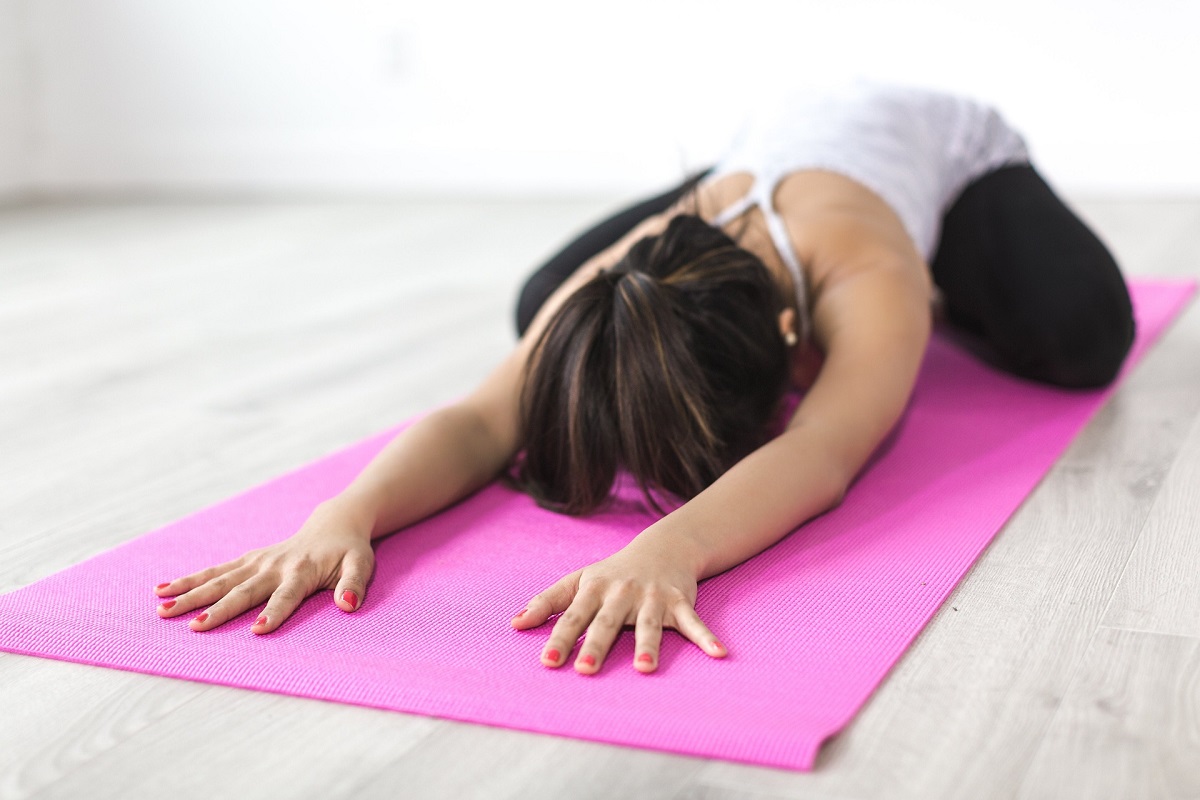
- Child’s Pose (Balasana). Kneel, sit back towards your heels and fold forward, arms extended or by your sides. A restful pose to return to any time you need a breather; calms the mind and releases the back.
- Corpse Pose (Savasana). Lie flat, arms relaxed, eyes closed, and breathe for a few minutes to finish. It lets your body absorb the practice — never skip it.
A Simple 15-Minute Beginner Routine
Yoga sequences generally flow from a gentle start, through more active poses, to a restful finish. Here’s a beginner-friendly version using the poses above:
- Mountain Pose — 1 minute. Arrive and breathe.
- Cat–Cow — 2 minutes. Warm up the spine.
- Downward-Facing Dog — 2 minutes (rest in between). Stretch and wake up the body.
- Warrior II — 3 minutes (both sides). Build strength and focus.
- Child’s Pose — 2 minutes. Rest and release.
- Gentle seated twist — 2 minutes (both sides). Ease the spine.
- Savasana — 3 minutes. Total stillness to finish.
Practising each pose two or three times, focusing on a different detail each time, helps beginners learn faster.
What to Expect in Your First Weeks
Setting realistic expectations is what keeps beginners going. Here’s an honest picture:
| Timeframe | What you’ll likely notice |
|---|---|
| Week 1 | Slightly challenging but manageable; you’ll wake up muscles you’d forgotten. Immediate sense of calm after practice. |
| 2–4 weeks | Noticeable changes in flexibility, sleep and stress levels for most people. |
| 2–3 months | Deeper flexibility and strength gains. Poses that felt awkward start to feel natural. |
The single biggest factor is consistency. A short practice done regularly beats a long one done occasionally. One honest caveat for home practice: you won’t have a teacher to correct your alignment, so pairing home sessions with the occasional in-person class (or a good beginner video) is a smart way to learn safely.
Real Case Study: Yoga and the Brain
The background: Yoga’s benefits aren’t only physical. Researchers have used brain imaging to look at what regular practice does to the brain itself.
What was found: As summarised by Harvard Health, studies using MRI and other brain-imaging technology have shown that people who practise yoga regularly tend to have a thicker cerebral cortex and hippocampus — the brain areas involved in information processing, learning and memory — compared with non-practitioners. Yoga’s effect on the parasympathetic (“rest and digest”) nervous system is described as particularly powerful.
The takeaway for beginners: The calm you feel after a session isn’t just in your head — or rather, it literally is, in the best way. These findings help explain why even short, gentle home practice can improve focus, mood and stress. You’re not only stretching your body; you’re supporting your brain.
Common Beginner Mistakes
- Waiting until you’re “flexible enough.” That day never comes because flexibility is built through practice. Start now, as you are.
- Pushing into pain. Yoga should feel like a stretch, never a sharp or shooting pain. Ease off and modify.
- Holding your breath. The breath is the heart of yoga — keep it slow and steady through every pose.
- Skipping Savasana. The final rest is where your body absorbs the practice. Don’t rush off the mat.
- Doing too much too soon. Long, ambitious sessions lead to soreness and burnout. Short and consistent wins.
Safety & Who Should Take Care
| Situation | Take care |
|---|---|
| Pregnancy | Choose prenatal yoga and avoid deep twists and lying flat on the back later on; check with your midwife. |
| Injury, back/neck issues or recent surgery | Get medical clearance and consider a qualified teacher; skip or modify poses that cause pain. |
| High/low blood pressure or glaucoma | Be cautious with inversions and head-down poses; ask a professional first. |
| Feeling dizzy or unwell during practice | Come out of the pose, rest, and breathe normally. Don’t push through it. |
Never force a pose into sharp pain. This article is educational and is not a substitute for professional medical advice.
Editor’s Insights
- Bend your knees generously in Downward Dog — a straight back beats straight legs.
- A wall is a beginner’s best friend for balance poses.
- Follow a beginner video for your first few weeks to learn the shapes safely.
- Consistency over intensity — 15 minutes, most days, transforms more than a weekly marathon.
Frequently Asked Questions
How do I start yoga at home as a beginner?
Set aside a small, quiet space and a mat, and begin with a short 10–15 minute routine of gentle foundational poses like Mountain Pose, Cat–Cow, Downward Dog, Child’s Pose and a gentle twist. Move slowly with your breath, don’t force anything, and practise a few times a week to build the habit.
Do I need to be flexible to do yoga?
No. Flexibility is a result of practising yoga, not a requirement to begin. Every pose can be modified with props or a gentler version, so beginners at any level of flexibility, age or fitness can start. Your flexibility will improve naturally as you keep practising.
How often should a beginner do yoga?
Three to four short sessions a week is a great start, though even a little daily practice works well. Consistency matters far more than length or intensity, so a regular 10–15 minute routine will bring results faster than an occasional long session.
What equipment do I need for home yoga?
Very little — a yoga mat is the main thing, as it prevents slipping and cushions your joints. Optional props like cushions, a folded blanket or blocks help you modify poses, but household items work just as well. Comfortable clothing you can move in completes the kit.
How long before I see results from yoga?
Most beginners notice a calmer mind and better sleep almost immediately, with clearer changes in flexibility and stress within two to four weeks of consistent practice. Deeper strength and flexibility gains usually take two to three months. Consistency is the biggest factor.
Which type of yoga is best for beginners?
Gentler, slower styles suit beginners best — hatha, yin and restorative yoga let you spend more time in each pose and focus on your breath and alignment. These build confidence and body awareness before you try faster, more vigorous flows.
Is it okay to learn yoga at home without a teacher?
Yes, many people start this way, and it’s great for learning the basic poses at your own pace. The one trade-off is no one to correct your alignment, so following a good beginner video and taking the occasional in-person class helps you practise safely.
Related Reading
- Healing yoga: what it is and how to begin — the restorative side of practice
- Morning yoga routine — start your day with movement
- Yoga for stress and anxiety — calming sequences
- How to meditate for beginners at home — pair yoga with meditation
- Diaphragmatic breathing exercises — the breath behind every pose
Final Thoughts
Starting yoga for beginners at home is far simpler — and far more forgiving — than it looks from the outside. Forget the flexibility myth, roll out a mat, and give yourself 15 gentle minutes to breathe and move. In a few weeks you’ll likely feel calmer, sleep better and move more easily; in a few months, poses that once felt impossible will feel like home. There’s no perfect way to begin and no level you need to reach first. Just start where you are — today.
References
- Harvard Health — Yoga’s effects on the brain and nervous system (as cited via Nike / Yoga Alliance summaries).
- Yoga Journal — A Home Yoga Practice for Beginners (sequence structure).
- Yoga Basics — Yoga for Beginners: Best Poses, Tips & How to Start (flexibility myth, timelines).
- Peloton / Nike — Yoga for Beginners (beginner poses and setup).