Healing Yoga: What It Is, What It Can (and Can’t) Do, and How to Begin
After a stressful week, there’s a particular kind of relief that comes from lying still on a mat, breathing slowly, and feeling your shoulders finally drop away from your ears. That feeling has a name: healing yoga — a gentle, restorative approach to practice that puts calm, recovery and the mind-body connection ahead of flexibility or fitness. It isn’t about touching your toes or holding a perfect pose. It’s about using slow movement, breath and stillness to help your body and mind settle and repair.
But healing yoga is also one of the most over-hyped terms in wellness, with some sources promising it can “cure” serious diseases or “unblock energy.” This guide takes a calmer, more honest path. You’ll learn what healing yoga genuinely is, what the science actually supports, how traditional ideas fit in, and six beginner-friendly poses to help you start — realistically and safely — today.
⏱ Time needed: 15–30 minutes ·
🎚 Difficulty: Beginner ·
🧘 Equipment: a mat (cushions optional) ·
🕐 Best time: evening or after stress
Quick Answer
Healing yoga is a gentle, restorative style of yoga that uses slow movement, deep breathing and mindful stillness to reduce stress and support the body’s natural recovery. Rather than chasing fitness goals, it calms the nervous system, eases tension and improves emotional wellbeing. Research supports its benefits for stress, mood and relaxation — though it complements, rather than replaces, medical care.
✅ Why you can trust this guide
Many “healing yoga” articles overpromise — claiming cures for serious diseases. This one doesn’t. We clearly separate what the evidence shows (e.g. research summarised by the US National Center for Complementary and Integrative Health on yoga for stress and wellbeing) from traditional teachings about energy and balance, which are spiritual concepts rather than proven mechanisms. Written and reviewed by the Spiritual Meditation Yoga Editorial Team. Educational only — not medical advice.
📑 Table of Contents
Key Takeaways
- Healing yoga is gentle and restorative — recovery over performance.
- It works largely by calming the nervous system through slow breath and movement.
- Evidence supports benefits for stress, mood, sleep and relaxation.
- Claims that it cures diseases or “unblocks energy” are not scientifically established.
- It’s suitable for most fitness levels, with modifications for every pose.
- Use it alongside — never instead of — medical treatment.
What Is Healing Yoga?
Healing yoga isn’t a single trademarked style — it’s an approach that prioritises restoration and the mind-body connection over athletic achievement. Where a vigorous flow class aims to build strength and heat, healing yoga slows everything down. It leans on gentle postures, long held stretches, conscious breathing and deliberate relaxation to help release physical tension and quieten a busy mind. Styles often grouped under this umbrella include restorative yoga, yin yoga and gentle hatha, frequently supported with props like bolsters and blankets so the body can fully let go.
The core idea is simple and appealing: when you give your body a calm, supported space and slow your breathing, you shift out of “fight or flight” and into a state where recovery becomes easier. That’s the sense in which yoga “heals” — not by curing illness directly, but by creating the conditions in which your body and mind can better look after themselves.
What the Evidence Actually Supports
Let’s be precise, because this is where most articles lose their footing. Research — including reviews summarised by the US National Center for Complementary and Integrative Health (NCCIH) — indicates that yoga can genuinely help with:
- Stress reduction and improved sense of wellbeing.
- Anxiety and low mood — as a helpful complementary practice.
- Sleep quality, particularly gentle evening practice.
- Chronic low-back and neck pain, where gentle yoga is often recommended.
- Balance, flexibility and body awareness.
These are meaningful, well-supported benefits. What the evidence does not establish is that yoga cures conditions like asthma, diabetes or heart disease, or that it works by “unblocking energy.” Being honest about this line is exactly what makes a healing-yoga practice trustworthy — and keeps it safe.
Tradition vs Science: An Honest Look
Healing yoga carries centuries of spiritual tradition, and those ideas deserve respect — but they shouldn’t be dressed up as science. Here’s a clear separation:
| Concept | Traditional teaching | What science says |
|---|---|---|
| “Unblocking energy” (prana) | Poses free stuck life-force so healing can flow | Prana is a spiritual concept, not measured by science; the felt benefit is real and likely nervous-system based |
| Balancing body–mind–spirit | Practice unites the whole self | Mind-body practices measurably reduce stress and improve mood |
| Self-healing | The body heals itself when balanced | Relaxation supports recovery, but yoga complements — not replaces — medical care |
How Healing Yoga Calms the Nervous System
The most credible explanation for why healing yoga feels so restorative is physiological, not mystical. Slow, deep breathing and gentle movement stimulate the parasympathetic nervous system — the “rest and digest” mode — and help switch off the chronic “fight or flight” state that stress keeps us stuck in. As that shift happens, heart rate can slow, blood pressure can ease, muscles relax and the mind quietens. Deep breathing also engages the vagus nerve, which plays a key role in calming the body. This is the real, evidence-aligned “healing” mechanism: not unblocking mysterious energy, but gently returning an overstimulated system to balance.
6 Gentle Healing Yoga Poses for Beginners
These beginner-friendly poses form the backbone of a restorative practice. Move slowly, breathe deeply, and never push into sharp pain.
Group 1 · Grounding
Settle and arrive
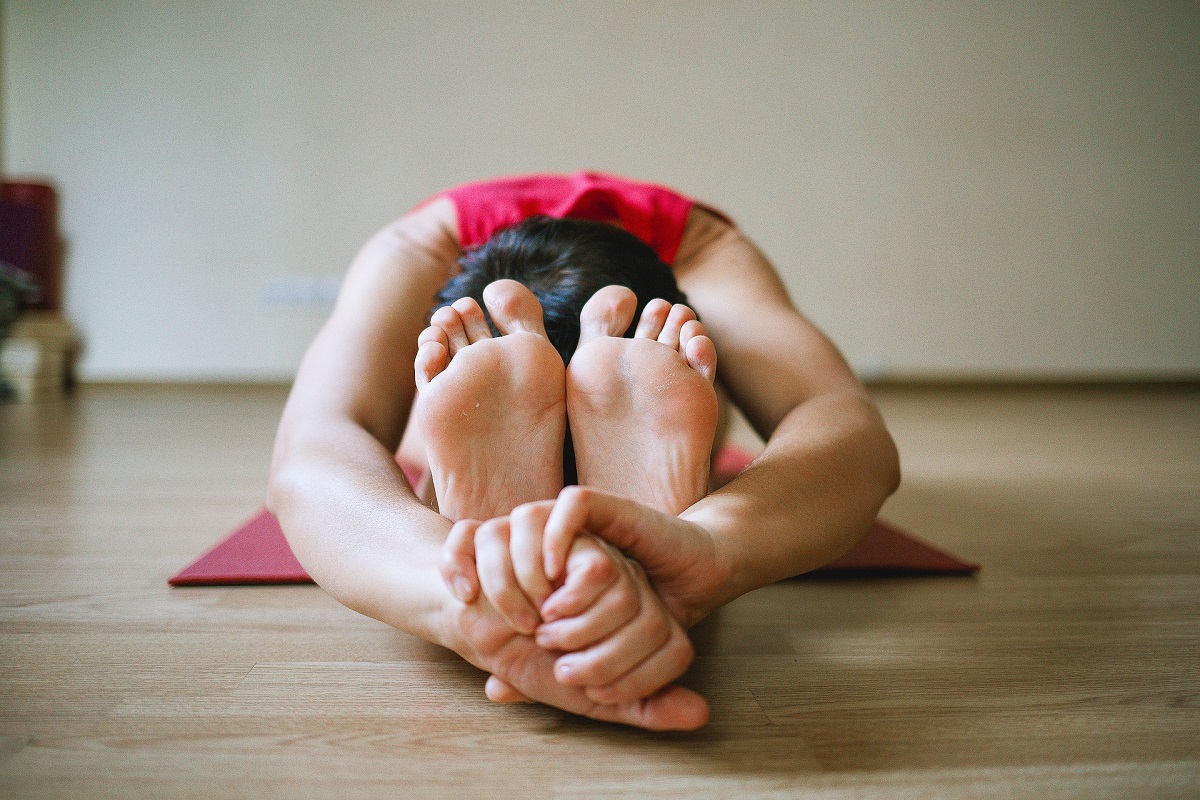
- Child’s Pose (Balasana). Kneel, sit back towards your heels and fold forward, arms extended or by your sides. Deeply calming for mind and lower back. Rest here and breathe.
- Cat–Cow (Marjaryasana–Bitilasana). On hands and knees, gently arch and round the spine with your breath. Releases back tension and links movement to breathing.
Group 2 · Gentle Opening
Release tension softly
- Supine Twist. Lie on your back, drop both knees to one side, arms wide. Eases the spine and aids relaxation. Repeat on both sides.
- Legs-Up-the-Wall (Viparita Karani). Lie down with legs resting up a wall. Wonderfully restful, helps tired legs and signals the body to relax.
Group 3 · Deep Rest
Complete the practice
- Supported Reclining Bound Angle. Lie back over a cushion or bolster, soles of the feet together, knees relaxed open. A deeply restorative heart-and-hip opener.
- Corpse Pose (Savasana). Lie flat, arms relaxed, eyes closed, and simply breathe for 5 minutes. The most important “pose” — it lets the whole practice absorb.
A Simple 15-Minute Healing Yoga Routine
- Child’s Pose — 2 minutes. Arrive and slow your breath.
- Cat–Cow — 2 minutes. Warm and mobilise the spine.
- Supine Twist — 2 minutes (1 each side). Release the back.
- Legs-Up-the-Wall — 3 minutes. Deep rest for legs and mind.
- Supported Reclining Bound Angle — 3 minutes. Open and soften.
- Savasana — 3 minutes. Total stillness to finish.
Breathe slowly throughout — a longer exhale than inhale deepens the calming effect.
Real Case Study: Yoga for Stress and Wellbeing
The background: Chronic stress shows up in the body as tension, poor sleep, headaches and difficulty concentrating. Researchers and clinicians have studied whether regular yoga can measurably ease it.
What the reviews show: According to research summarised by the US National Center for Complementary and Integrative Health, yoga can help reduce stress, support mental wellbeing, and improve sleep and quality of life. Osteopathic physicians note that regular practice creates mental clarity and calm, relieves chronic stress patterns and sharpens concentration — precisely the outcomes healing yoga aims for.
The honest takeaway: This is where healing yoga’s reputation is genuinely earned. The evidence points to real benefits for stress, mood and relaxation — not to disease cures. Framed that way, healing yoga is a powerful, safe, everyday tool for looking after your mind and body, exactly as far as the science supports and no further.
Safety & Who Should Take Care
| Situation | Take care |
|---|---|
| Pregnancy | Avoid deep twists and lying flat on the back later in pregnancy; seek a prenatal-trained teacher and check with your midwife. |
| Injury, back/neck problems or recent surgery | Get medical clearance and work with a qualified teacher; modify or skip poses that cause pain. |
| High or low blood pressure, glaucoma | Be cautious with inversions (even legs-up-the-wall); ask a professional first. |
| Any ongoing medical condition | Use healing yoga to support wellbeing alongside your treatment — never as a replacement. |
Never push into sharp or shooting pain. This article is educational and is not a substitute for professional medical advice.
Editor’s Insights
- The real “medicine” is the exhale — lengthen it and the calm follows.
- Props aren’t cheating; a bolster lets your body actually let go.
- Consistency beats intensity — 15 gentle minutes daily outperforms an occasional long class.
- Judge a session by how you feel afterwards, not by how “deep” you got.
Frequently Asked Questions
What is healing yoga?
Healing yoga is a gentle, restorative approach to yoga that uses slow movement, deep breathing and mindful stillness to reduce stress and support the body’s natural recovery. It prioritises calm and the mind-body connection over fitness or flexibility, and often uses props for comfort and deep relaxation.
Can healing yoga cure illness?
No. Healing yoga is not a cure for any disease. What the evidence supports is that it helps reduce stress, improve mood and sleep, and ease some chronic pain — creating conditions that support wellbeing. It should always be used alongside, not instead of, medical treatment.
Is healing yoga good for beginners?
Yes — it’s one of the most beginner-friendly styles. The poses are gentle, slow and easily modified, and there’s no need for strength or flexibility to start. A short daily routine of restful poses like child’s pose and legs-up-the-wall is a perfect entry point.
How often should I practise healing yoga?
Even 15 minutes a day can make a noticeable difference to stress and relaxation. Consistency matters more than length, so a short, regular practice is more valuable than an occasional long session. Evening practice is especially good for winding down and sleep.
What’s the difference between healing yoga and regular yoga?
Regular yoga styles often focus on building strength, stamina and flexibility through active movement. Healing yoga slows things right down, emphasising restoration, breathing and relaxation. It’s less about what your body can do and more about helping it release tension and recover.
Does healing yoga really “unblock energy”?
“Unblocking energy” is a traditional spiritual concept, not a scientifically measured mechanism. The very real calm and relief people feel is best explained by yoga activating the body’s relaxation response through slow breath and gentle movement. We respect the tradition while being clear about the science.
Can healing yoga help with anxiety and sleep?
Research suggests yoga can help ease anxiety and improve sleep quality as a complementary practice. Its slow breathing and relaxation calm an overactive nervous system, which supports both a quieter mind and better rest. For significant anxiety, use it alongside professional support.
Related Reading
- Yoga for beginners at home — how to start your practice
- Restorative yoga poses for sleep — wind down for deeper rest
- Yoga for stress and anxiety — calming sequences
- How to meditate for beginners at home — pair yoga with meditation
- Diaphragmatic breathing exercises — the breath behind the calm
Final Thoughts
Healing yoga earns its name not through miracles but through something quietly powerful: giving your body and mind permission to slow down and recover. Approached honestly — as a gentle practice that eases stress, lifts mood and supports wellbeing, rather than a cure for illness — it becomes one of the most accessible self-care tools you have. Roll out a mat this evening, move slowly, breathe deeply, and let the stillness do its work.
References
- US National Center for Complementary and Integrative Health (NCCIH) — Yoga: What You Need To Know (stress, wellbeing, back pain).
- American Osteopathic Association / Find a DO — The Healing Power of Yoga.
- Rest Less (UK) — Healing yoga poses for mind and body.
- General yoga research summaries on the parasympathetic nervous system and stress response.