
How to Meditate for Beginners at Home
If you have ever sat down to meditate and thought, “Am I even doing this right?” — you are in exactly the right place. Meditation can feel mysterious from the outside, but at its simplest it is just a way to pause, breathe and gently rest your attention. You do not need incense, an app subscription or an hour of free time. You need a quiet-ish corner, a few minutes and a little patience.
This guide shows you how to meditate for beginners at home, step by step: how to set up your space, choose a technique that suits you, sit comfortably, and handle the wandering mind that trips up almost everyone at the start. By the end, you will have a realistic five-minute routine you can begin today — and a clear sense of what “doing it right” actually means.
🎚 Difficulty: Beginner
🧘 Props/equipment: none (a cushion or chair helps)
🕐 Best time: morning or evening — whichever you’ll repeat
Quick Answer
To meditate at home as a beginner, sit comfortably in a quiet spot, set a timer for five minutes, close your eyes and breathe naturally. Rest your attention on the feeling of each breath. When your mind wanders, gently return to the breath. That returning is the practice — repeat daily.
Key Takeaways
- Meditation is simply resting your attention — noticing when it drifts, and bringing it back.
- Start with 5 minutes a day; consistency matters far more than length.
- You do not need special equipment — a chair or cushion is enough.
- A wandering mind is normal and expected; noticing it is the skill, not a failure.
- Guided or mindful-breathing meditation is the easiest entry point for beginners.
- Sit upright but relaxed — lying down often leads to sleep.
- Pick a consistent time and anchor it to an existing habit to build the routine.
Table of Contents
- What Meditation Actually Is (and Isn’t)
- Why Meditating at Home Works So Well
- Setting Up Your Meditation Space
- Choosing a Beginner-Friendly Technique
- How to Meditate: A 5-Step Method
- How Long Should Beginners Meditate?
- What to Do When Your Mind Won’t Settle
- Common Beginner Mistakes (and Better Approaches)
- Building a Daily Habit That Lasts
- FAQ
What Meditation Actually Is (and Isn’t)
Meditation is a practice of intentionally directing and resting your attention — often on the breath, the body or a word — to cultivate calm, awareness and focus. It is a skill you build gradually, not a state you switch on.
Meditation has roots stretching back thousands of years across Buddhist, Hindu and other contemplative traditions, where it formed part of a wider spiritual path. Today it is practised both as a secular wellbeing tool and as part of those older traditions. A common misconception is that meditation means “emptying the mind” or “stopping thoughts.” It doesn’t. Thoughts will keep arising — the practice is in how you relate to them: noticing, letting go and returning, without frustration or judgement.
Why Meditating at Home Works So Well
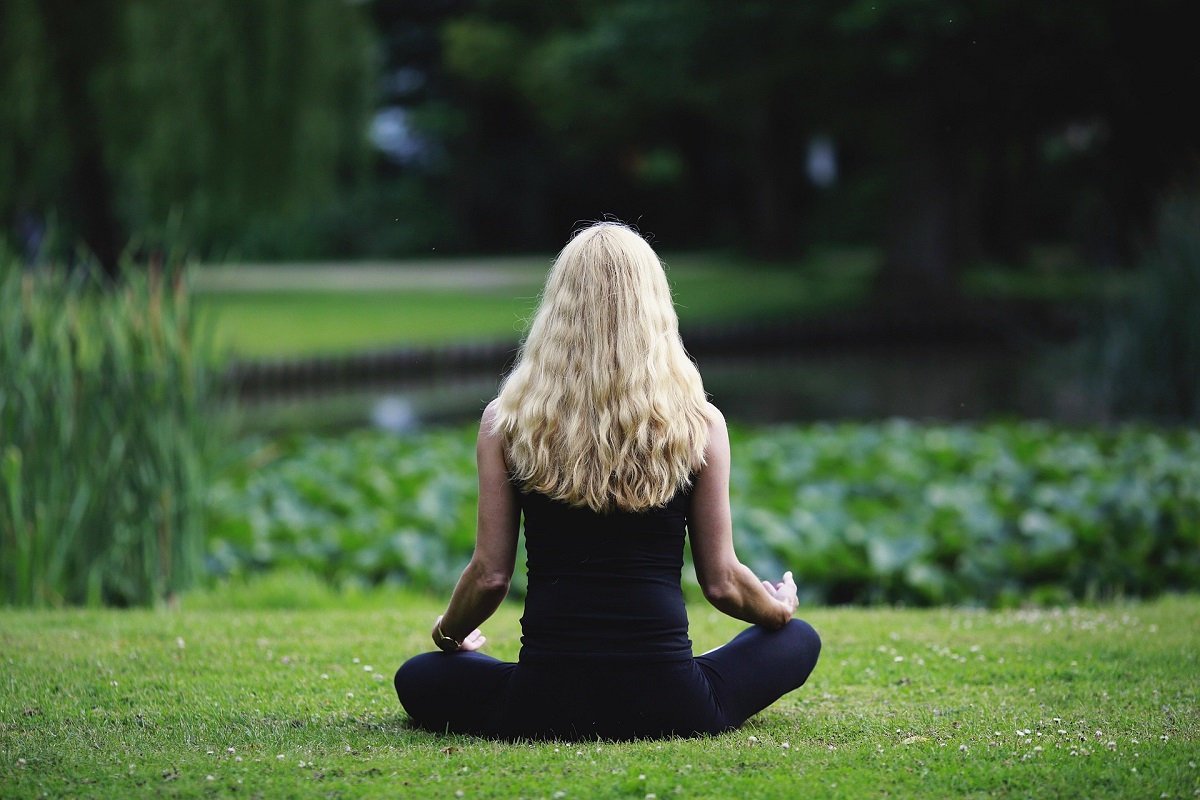
Home removes almost every barrier that stops beginners. There is no class to book, no commute and no audience. Meditating at home is convenient, private and flexible — you can practise any time, in a space where you feel comfortable and undisturbed, and many resources are free or low-cost. That privacy matters more than people expect: when no one is watching, you stop worrying about “looking like you’re meditating properly” and can simply practise.
Editor’s Insight: The biggest advantage of home practice isn’t comfort — it’s repeatability. A five-minute sit you can do every morning beats a perfect studio session you manage once a fortnight.
Setting Up Your Meditation Space
You do not need a dedicated room — just a spot your mind can begin to associate with calm.
- Choose a quiet-enough corner. A bedroom corner, a comfy chair or a cushion by a window all work. Complete silence isn’t required.
- Reduce obvious distractions. Put your phone on Do Not Disturb (or use it only for a timer or guided track).
- Get comfortable and warm. You don’t need any specialist equipment — just somewhere comfortable and warm to sit; a cushion, chair or bed all work, as long as you’re comfortable and can stay upright.
- Keep it simple. A candle or a plant is nice, but nothing is essential. The space serves the habit, not the other way round.
Choosing a Beginner-Friendly Technique
There are many styles of meditation, but a few are especially forgiving for beginners:
| Technique | What You Do | Best For |
|---|---|---|
| Mindful breathing | Rest attention on the natural breath | Almost everyone; the simplest start |
| Guided meditation | Follow an audio or video teacher | People who like structure and prompts |
| Body scan | Move attention slowly through the body | Relaxation, winding down, sleep |
| Mantra meditation | Silently repeat a calming word or phrase | Minds that settle better with an anchor word |
| Loving-kindness | Direct goodwill towards yourself and others | Cultivating warmth and emotional balance |
For beginners, starting with guided meditation or mindfulness (breathing) meditation is usually easiest. You don’t need to choose “forever” — try one for a week and see how it feels.
How to Meditate: A 5-Step Method
Step 1: Preparation
Pick your spot and set a timer for 5 minutes. Knowing the session has a defined end reduces the restlessness that comes from wondering “how much longer?”
Step 2: Position
Sit in a comfortable position — cross-legged on a cushion, kneeling, or in a chair with your feet flat on the floor, with your spine approximately upright (not rigidly straight — a gentle natural curve is fine) and your hands resting in your lap or on your thighs. You do not have to sit on the floor.
Step 3: Technique
Close your eyes (or lower your gaze). Breathe naturally and bring your attention to the physical sensation of breathing — the air at your nostrils, or the gentle rise and fall of your chest or belly. If it helps, silently note “breathing in… breathing out.”
Step 4: Duration
Stay with the breath for the full five minutes. Each time you notice your attention has wandered — to a thought, a sound, a plan — gently escort it back to the breath. No annoyance needed; this is the exercise.
Step 5: Completion
When the timer sounds, don’t leap up. Take one slower breath, notice how your body feels, and open your eyes gradually. That brief pause helps the calm carry into your day.
Beginner modification: If focusing on the breath feels difficult, use a guided track for the first week so a voice does the steering. Common difficulty: Feeling fidgety or “bad at it” — that’s normal. What to expect: Some sessions feel calm, others feel busy; both are fine, and progress shows up over weeks, not single sittings. What to avoid: Judging the session as “good” or “bad” — the only failed meditation is the one you talk yourself out of doing. When to stop: If you feel genuinely distressed rather than simply restless, it’s fine to open your eyes, breathe normally and pause for the day.
Safety & When to Take Care
A Few Sensible Notes
| Situation | Take Care |
|---|---|
| History of anxiety, panic or trauma | Some people, particularly those with anxiety, find that directing attention inward initially increases awareness of anxious sensations. Start very short, keep eyes slightly open, or use guided practice. Consider working with a teacher or therapist. |
| Feeling sleepy during practice | Sit more upright, meditate earlier in the day, or try walking meditation instead of lying down. |
| Existing mental-health condition | Meditation supports wellbeing but is not a substitute for professional care. Speak to your GP or a qualified professional if symptoms are significant. |
This article is educational and is not a substitute for professional medical advice.
How Long Should Beginners Meditate?
Start small and stay consistent. Five to ten minutes a day is an ideal beginner range, and you can extend it gradually as sitting becomes easier. A daily five-minute habit builds the skill far faster than an occasional half-hour. As one experienced meditator describes it, five minutes can feel like an eternity at the start — yet with practice, much longer sessions begin to pass quickly. Let length follow comfort, not ambition.
What to Do When Your Mind Won’t Settle
This is the single most common beginner experience — and the one that makes people quit. Here’s the reframe that changes everything:
Noticing that your mind has wandered is not a failure — it is the practice. The mental act of noticing you’ve got lost and redirecting your attention is what builds the skill. A session where you notice a hundred distractions and return a hundred times is not a bad session; it’s 100 repetitions of the core exercise.
A busy mind is the normal condition of an untrained mind, and busy minds actually make good practice material — concentration is built by returning, not by achieving silence, and it builds over time (week 8 feels different from week 1).
So when your mind races: don’t fight it, don’t grade yourself. Just notice, and come back. Again and again. That’s it.
Common Beginner Mistakes (and Better Approaches)
Mistake 1 — Trying to “empty” the mind. Why it happens: it’s the popular image of meditation. Why it matters: it sets an impossible goal, so beginners feel like failures. Better approach: aim to notice and return, not to erase thoughts.
Mistake 2 — Starting with sessions that are too long. Why it happens: enthusiasm, or thinking longer is better. Why it matters: long, uncomfortable sits kill motivation. Better approach: begin with five minutes and grow slowly.
Mistake 3 — Lying down (then falling asleep). Why it happens: it feels the most relaxing. Why it matters: lying down tends to lead to sleep, particularly for beginners. Better approach: sit upright but relaxed; save lying down for a dedicated sleep meditation.
Mistake 4 — Judging each session as good or bad. Why it happens: we measure everything by results. Why it matters: it turns a calming practice into a test. Better approach: drop the scorecard; showing up is the win.
Mistake 5 — Practising only when you “feel like it.” Why it happens: no routine anchor. Why it matters: the habit never forms. Better approach: attach meditation to an existing daily cue (after brushing your teeth, before your first coffee).
Building a Daily Habit That Lasts
Editor’s Insights
- Anchor, don’t schedule. “Meditate after I switch the kettle on” sticks far better than “meditate at 7:00 am.”
- Same spot, same time. Repetition trains your brain to settle faster — the cushion becomes a cue.
- A timer beats a clock-watch. Set it and forget it; checking the time is itself a distraction.
- Count returns, not minutes. On a busy day, treat every “come back to the breath” as a rep well done.
- One week per technique. Give a style seven days before deciding it’s “not for you.”
Which Technique Should You Try First?
| Your Goal | Consider Starting With |
|---|---|
| Easing in with structure | Guided meditation |
| Building plain, portable focus | Mindful breathing |
| Relaxing or winding down for sleep | Body scan |
| Settling a very busy mind | Mantra meditation |
| Cultivating warmth and calm | Loving-kindness |
No single technique is universally “best” — the right one is the one you’ll actually repeat.
Checklist 1: Before You Sit
- Chosen a quiet-enough spot
- Phone on Do Not Disturb
- Timer set for 5 minutes
- Comfortable, upright seat
Checklist 2: During Practice
- Breathe naturally
- Rest attention on the breath
- Notice wandering without judgement
- Gently return, as many times as needed
Frequently Asked Questions
How do I start meditating at home as a complete beginner?
Pick a quiet spot, sit comfortably and set a five-minute timer. Close your eyes, breathe naturally, and rest your attention on each breath. When your mind wanders, gently bring it back. Do this once a day and gradually extend the time as it feels easier.
How long should a beginner meditate?
Begin with five to ten minutes a day. Consistency matters more than duration — a short daily practice builds the skill faster than occasional long sessions. You can slowly increase the length once sitting still feels more natural, over a few weeks.
What is the best meditation position for beginners?
Sit upright but relaxed — cross-legged on a cushion, kneeling, or in a chair with your feet flat on the floor. Keep your spine gently upright and rest your hands in your lap. You don’t need to sit on the floor; a chair is perfectly fine.
Is it normal for my mind to wander constantly?
Yes — completely. A busy mind is the normal state of an untrained mind. Noticing that you’ve drifted and returning to the breath is the actual practice. Every return strengthens your focus, so a “distracted” session is still valuable practice.
Do I need any equipment to meditate at home?
No. You only need somewhere comfortable and warm to sit. A cushion or supportive chair can help you stay upright, and a timer or free guided track is useful, but none of it is essential to begin.
Can I meditate lying down or in bed?
You can, but it often leads to sleep — especially for beginners. If your goal is alert awareness, sit upright. Lying down suits a dedicated body-scan or sleep meditation, where drifting off isn’t a problem.
What’s the easiest type of meditation to start with?
Mindful breathing or guided meditation. Breathing meditation needs no tools, and guided sessions give you a voice to follow so you’re never unsure what to do next. Either is a gentle, forgiving entry point.
I have anxiety — is meditation safe for me?
For many people it helps, but turning attention inward can, at first, heighten awareness of anxious sensations for some. Start with very short, guided sessions and keep your eyes slightly open if needed. If anxiety is significant, meditate alongside support from a qualified professional.
Schema Recommendations
- Article schema — core page markup
- HowTo schema — the 5-step meditation method qualifies
- FAQPage schema — the FAQ section (genuine Q&A)
- BreadcrumbList schema — Home > Meditation > Beginners > this article
- ImageObject schema — hero image
Structured data must match visible content.
Sources & References
- NHS — Every Mind Matters: How to meditate for beginners (equipment, posture, breathing method, routine).
- Simply Psychology — How to Start Meditating: A Beginner’s Practical Guide (2026) (wandering mind, posture, duration, anxiety note).
- Mindful.org — How to Meditate (beginner steps, short time limits).
- Mindfulness Meditation Hub — How to Meditate for Beginners at Home (home benefits, technique overview).
Conclusion
Meditating at home doesn’t require the perfect cushion, an empty mind or an hour to spare. It asks for five quiet minutes, a comfortable upright seat and a willingness to keep gently returning your attention to the breath. Do that most days and you’ll build a genuine, lasting practice — one noticing, one return at a time. Sit down, set the timer, and let today be day one.