
Key Takeaways
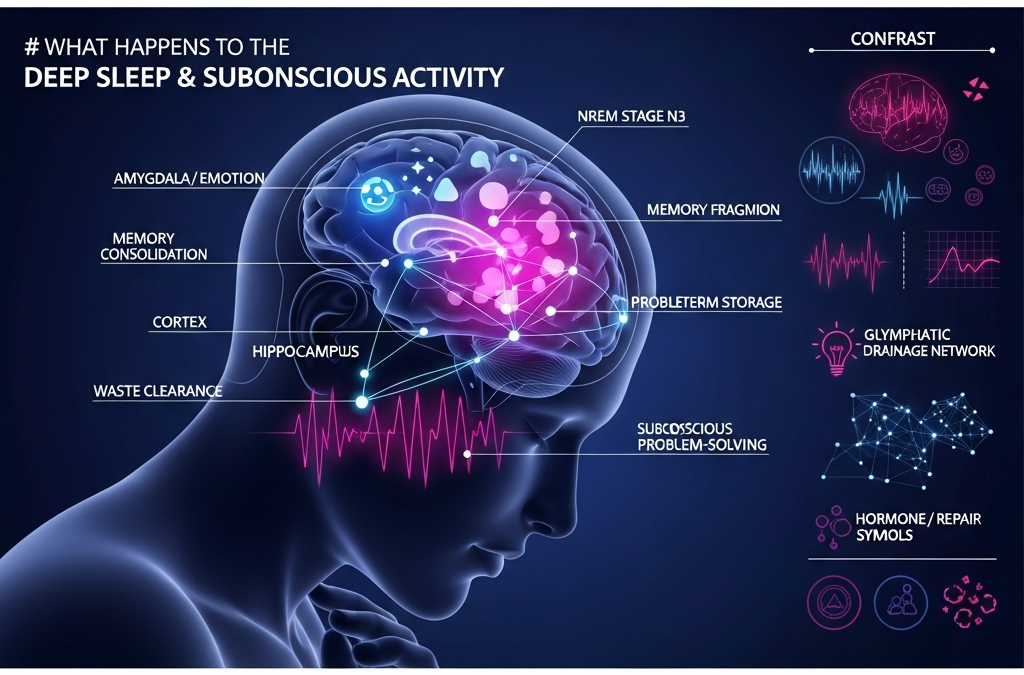
- Memory Consolidation: Deep sleep, characterized by slow-wave activity, is crucial for transferring short-term memories into long-term storage, integrating new learning, and processing emotional experiences.
- Brain Detoxification: The glymphatic system, highly active during deep sleep, efficiently clears metabolic waste products from the brain, including those linked to neurodegenerative diseases.
- Emotional Regulation: The subconscious mind processes and recalibrates emotional responses during deep sleep, contributing to improved mood, reduced anxiety, and enhanced psychological resilience.
- Problem-Solving & Creativity: While consciously resting, the subconscious actively works on complex problems, identifies patterns, and fosters creative insights, often leading to ‘aha!’ moments upon waking.
- Overall Well-being: Adequate deep sleep is fundamental not just for cognitive function but also for physical health, immune system strength, and maintaining a balanced emotional state.
Introduction
Sleep, a fundamental biological necessity, is far more than mere unconsciousness. Within its intricate stages, a profound orchestration of neural and physiological processes unfolds, particularly impacting the unseen depths of our psyche. This article delves into the enigmatic question: what happens to the subconscious mind during deep sleep? We will explore how this critical phase of rest serves as a crucible for memory, emotion, and cognitive refinement, revealing the subconscious mind’s pivotal role in shaping our waking reality and overall well-being. Understanding this nocturnal world unveils the incredible, often underestimated, work our brains accomplish while we are seemingly at rest.
The Subconscious Mind’s Unseen Symphony During Deep Sleep
Defining the Subconscious and Deep Sleep States
Deep sleep is a complex biological state, and its interaction with the subconscious mind is a cornerstone of cognitive function. To understand this interaction, we must first clearly define both entities.
Unpacking the Subconscious Mind
- Definition and Functions:
- The subconscious mind is the part of our mental processing that lies beneath conscious awareness, influencing our thoughts, feelings, and behaviors without direct voluntary control.
- It encompasses automated processes, learned habits, intuition, memories, and deeply held beliefs.
- Serves as a vast repository of information and experiences, constantly processing data from our environment and internal states.
- Relation to Conscious Mind:
- Works in tandem with the conscious mind, often guiding decisions and reactions based on past experiences and ingrained patterns.
- Operates on symbolic language and emotions, distinct from the conscious mind’s logical, linear processing.
- Brief History/Theories (Freud, Jung):
- Freud’s Perspective: Viewed the subconscious as a reservoir for repressed desires, memories, and instincts, significantly shaping personality and behavior. Dreams were seen as a ‘royal road’ to the unconscious.
- Jung’s Perspective: Expanded on the concept with the ‘collective unconscious,’ a shared repository of archetypes and experiences inherited across humanity, alongside the personal unconscious. Highlighted its role in spiritual and symbolic life.
The Architecture of Deep Sleep (NREM Stage 3 & 4)
- EEG Patterns (Delta Waves):
- Deep sleep, also known as slow-wave sleep (SWS), is characterized by high-amplitude, low-frequency delta waves on an electroencephalogram (EEG).
- These delta waves signify highly synchronized neural activity across large regions of the brain, distinct from the rapid, desynchronized activity of wakefulness or REM sleep.
- Physiological Changes:
- Heart Rate and Respiration: Both slow significantly, reaching their lowest rates during this stage, indicating profound physiological relaxation.
- Muscle Relaxation: Muscles are completely relaxed (muscle atonia is less pronounced than in REM, but relaxation is deep).
- Body Temperature: Core body temperature typically drops.
- Hormonal Activity (Growth Hormone Release): Deep sleep is crucial for the release of Human Growth Hormone (HGH), essential for tissue repair, muscle growth, and metabolic regulation.
- Arousal Threshold:
- Individuals are most difficult to awaken during deep sleep; external stimuli must be particularly strong to cause arousal.
- Awakening from deep sleep often results in sleep inertia, a temporary state of grogginess and disorientation.
Distinguishing Deep Sleep from Other Sleep Stages
- Characteristics of Sleep Stages:
| Feature | NREM Stage 1 (N1) | NREM Stage 2 (N2) | NREM Stage 3/4 (SWS) | REM Sleep |
|---|---|---|---|---|
| EEG Waves | Alpha, Theta | Sleep Spindles, K-Complexes | Delta Waves (Slow Waves) | Low-amplitude, Mixed Frequency (similar to wakefulness) |
| Brain Activity | Drowsiness, Transition | Light Sleep, Memory Begin | Highly Synchronized, Memory Consolidation, Glymphatic Activity | Highly Active, Vivid Dreaming, Emotional Processing |
| Muscle Tone | Relaxed | Relaxed | Very Relaxed | Atonia (Paralysis) |
| Eye Movement | Slow Rolling | None | None | Rapid Eye Movements |
| Dreaming | Rare, Fragmented | Rare, Mundane | Less common, more thought-like, less vivid | Common, Vivid, Bizarre |
| Arousal | Easily Awakenable | Relatively Easy | Very Difficult | Relatively Difficult |
The Brain’s Activity During Delta Wave Dominance
Even in its profound state of rest, the deep-sleeping brain is highly active, performing vital maintenance and organizational tasks that significantly involve the subconscious.
Neural Oscillations and Memory Consolidation
- Role of Delta Waves:
- Delta waves are not just a sign of deep rest; they are active participants in memory processing.
- They facilitate the ‘replay’ of neural firing patterns experienced during wakefulness, reinforcing learning.
- Hippocampal-Neocortical Dialogue: Delta waves synchronize the activity between the hippocampus (where new memories are initially encoded) and the neocortex (where long-term memories are stored). This synchronization is crucial for transferring explicit memories from temporary to permanent storage.
- Slow-Wave Activity’s Impact on Synaptic Plasticity:
- Deep sleep is thought to downscale synaptic strengths (synaptic homeostasis hypothesis), allowing for an optimal learning state the next day by clearing out ‘noise’ and strengthening relevant connections.
- This process, mediated by slow-wave oscillations, ensures that the brain doesn’t become oversaturated with information.
Glymphatic System Activation and Waste Clearance
- Discovery and Function:
- Discovered relatively recently (2012), the glymphatic system is a brain-wide waste clearance pathway that functions similarly to the lymphatic system in the body.
- It facilitates the rapid exchange of cerebrospinal fluid (CSF) with interstitial fluid, effectively flushing metabolic byproducts.
- Flushing Metabolic Waste (e.g., Amyloid-Beta):
- During deep sleep, brain cells shrink by up to 60%, creating larger interstitial spaces that allow CSF to flow more freely.
- This increased flow helps remove neurotoxic waste products, including amyloid-beta proteins, which are implicated in Alzheimer’s disease.
- Importance for Brain Health and Cognitive Function:
- Efficient glymphatic clearance is vital for preventing the accumulation of toxic proteins, thereby preserving neuronal health and long-term cognitive function.
- Disruptions to deep sleep can impair glymphatic function, potentially contributing to neurodegenerative disorders.
Reduced Sensory Processing and Internal Focus
- Brain’s Disengagement from External Stimuli:
- The heightened arousal threshold in deep sleep signifies a significant reduction in the brain’s processing of external sensory input.
- This ‘offline’ state allows the brain to divert resources from external monitoring to internal maintenance and organizational tasks.
- Increased Focus on Internal Processes:
- With minimized external distractions, the subconscious mind is free to sort, categorize, and integrate the day’s experiences, memories, and emotions.
- This internal focus is crucial for the undisturbed work of memory consolidation and emotional regulation.
Memory Consolidation and Learning Reinforcement
One of the most profound roles of the subconscious mind during deep sleep is its pivotal contribution to memory processing and learning.
From Short-Term to Long-Term Storage
- Mechanisms of Memory Transfer:
- Deep sleep acts as a critical phase for transferring newly acquired memories from the hippocampus (temporary storage) to the neocortex (permanent storage).
- This process involves the precise re-activation of neuronal ensembles that fired during the learning experience.
- Role of Sleep Spindles and Slow Oscillations:
- Slow Oscillations: These delta waves orchestrate the timing of memory replay.
- Sleep Spindles: Brief bursts of high-frequency brain activity (12-16 Hz) that occur predominantly in NREM sleep. They are thought to be essential for strengthening and integrating memories within cortical networks, acting as ‘packaging signals’ for memory transfer.
- The interplay between slow oscillations and sleep spindles is critical for the effective dialogue between the hippocampus and the cortex.
Emotional Memory Processing
- Processing and Integrating Emotional Experiences:
- Deep sleep helps to process and integrate emotionally charged memories, allowing for a more balanced perspective.
- It helps to detach the emotional intensity from factual events, making traumatic or stressful memories less distressing over time.
- Reducing the Emotional Charge of Traumatic Memories:
- Research suggests that the amygdala (the brain’s emotional center) shows reduced activity during deep sleep, allowing memories to be re-evaluated and stored with less associated emotional charge.
- This function is vital for psychological healing and resilience.
Skill Acquisition and Procedural Memory
- Impact on Learning Motor Skills:
- Deep sleep is essential for the consolidation of procedural memories, which govern learned skills like playing a musical instrument, riding a bike, or typing.
- The subconscious mind refines and optimizes neural pathways associated with these motor sequences, improving performance and accuracy.
- Reinforcing Cognitive Skills:
- Beyond motor skills, deep sleep also aids in consolidating complex cognitive skills, such as problem-solving strategies or linguistic rules.
- This subconscious practice leads to improved proficiency and automaticity in learned tasks.
Emotional Regulation and Psychological Well-being
The subconscious work during deep sleep extends significantly to our emotional landscape, profoundly impacting our mental health.
Processing Unconscious Emotions
- Working Through Unresolved Issues:
- While we sleep, the subconscious mind continues to process emotional content and unresolved conflicts from the day.
- This ‘offline’ processing can lead to a sense of clarity or resolution upon waking, even if the conscious mind wasn’t actively engaged in problem-solving.
- Role in Reducing Anxiety and Stress:
- Adequate deep sleep helps to reduce the brain’s reactivity to stress, buffering the impact of daily pressures.
- It recalibrates the nervous system, shifting it from a ‘fight-or-flight’ (sympathetic) state towards a ‘rest-and-digest’ (parasympathetic) state.
Impact on Mood and Resilience
- Link to Emotional Stability:
- Sufficient deep sleep is directly correlated with improved mood, reduced irritability, and greater emotional stability.
- Disruption of deep sleep, conversely, is a common symptom and exacerbating factor in mood disorders like depression and anxiety.
- Contribution to Psychological Resilience:
- By facilitating emotional processing and memory consolidation, deep sleep strengthens an individual’s capacity to cope with adversity and bounce back from stressful experiences.
- It helps the subconscious build a more robust emotional framework.
The Role in Creativity and Problem Solving
One of the most intriguing aspects of the subconscious mind in deep sleep is its capacity for fostering creativity and insightful problem-solving.
Incubation of Ideas
- How the Subconscious Processes Information:
- During deep sleep, the subconscious mind is not constrained by conscious logic or linear thought, allowing it to freely associate disparate ideas and information.
- It reviews and reorganizes the day’s experiences, searching for novel connections that might be overlooked during wakefulness.
- “Sleeping on it” Phenomenon:
- The common adage to “sleep on it” has a strong neurological basis. Deep sleep provides the necessary environment for the subconscious to work on complex problems, often leading to fresh perspectives or solutions that emerge spontaneously upon waking.
- This is distinct from the more direct problem-solving that can occur in REM sleep.
Pattern Recognition and Insight Generation
- Connecting Disparate Pieces of Information:
- The subconscious mind excels at identifying subtle patterns and underlying structures within vast amounts of information.
- During deep sleep, it can integrate fragmented pieces of knowledge into a coherent whole.
- Facilitating “Aha!” Moments:
- Many groundbreaking discoveries and creative breakthroughs have been attributed to insights gained after a period of sleep, suggesting that the subconscious synthesis performed during deep sleep can lead directly to sudden moments of understanding or inspiration.
Dreams in Deep Sleep vs. REM Sleep
While REM sleep is renowned for vivid dreaming, deep sleep also harbors its own unique dream experiences, offering a different window into the subconscious.
Dream Characteristics in NREM Sleep
- Less Vivid, More Thought-Like:
- Dreams in NREM sleep, especially deep sleep, are typically less vivid, bizarre, and emotionally intense compared to REM dreams.
- They often resemble waking thoughts or mundane activities, such as pondering a problem or reliving a recent event.
- Fragmented Narratives:
- NREM dreams tend to be more fragmented and less coherent in their narrative structure.
- Awakenings from deep sleep are less likely to yield dream recall, and when they do, the reported content is often brief and conceptual.
Symbolic Processing and Unconscious Desires
- Subconscious Manifestation:
- Despite their subtle nature, NREM dreams can still reflect the subconscious mind’s current concerns, anxieties, or desires.
- They may represent early-stage processing of emotions or thoughts that will be more fully elaborated in subsequent REM cycles.
- Connecting to Underlying Concerns:
- Even if not overtly symbolic, the themes or thoughts present in deep sleep dreams can provide clues to the subconscious’s preoccupations, often related to daily events, learning, or emotional integration.
Impact on Intuition and Decision-Making
Deep sleep plays an indirect yet crucial role in sharpening our intuition and enhancing our capacity for effective decision-making by allowing the subconscious to process information without conscious bias.
Subconscious Data Synthesis
- Processing Vast Amounts of Data:
- The subconscious mind continually collects and processes sensory and experiential data below the threshold of conscious awareness.
- During deep sleep, this vast database is organized and integrated, forming a complex internal model of the world.
- Forming Gut Feelings:
- Intuition, often described as a ‘gut feeling,’ is the result of rapid, subconscious pattern recognition. Deep sleep refines these patterns, allowing the subconscious to make quicker and often more accurate assessments based on past experiences.
Refining Choices
- Evaluating Options Without Conscious Bias:
- By stepping away from a problem (literally, by going to sleep), the subconscious mind can evaluate different options and scenarios without the biases, anxieties, or overthinking that can plague conscious decision-making.
- This ‘unbiased’ processing can lead to clearer, more confident choices upon waking.
Health Implications of Disrupted Deep Sleep
Given the critical roles of the subconscious mind during deep sleep, its disruption has profound and far-reaching negative consequences for both mental and physical health.
Cognitive Decline and Memory Impairment
- Link to Alzheimer’s Disease:
- Chronic disruption of deep sleep can impair the glymphatic system’s ability to clear amyloid-beta proteins, increasing the risk of plaque accumulation, a hallmark of Alzheimer’s disease.
- Reduced deep sleep is increasingly recognized as a risk factor for cognitive decline in later life.
- Reduced Ability to Learn and Recall:
- Insufficient deep sleep directly hampers the brain’s capacity for memory consolidation, leading to difficulty learning new information, impaired recall of facts, and reduced skill acquisition.
- This negatively impacts academic performance, professional productivity, and daily functioning.
Emotional Dysregulation and Mental Health Issues
- Increased Risk of Anxiety and Depression:
- Poor deep sleep is strongly correlated with increased symptoms of anxiety, irritability, and depression.
- The subconscious mind’s inability to effectively process and regulate emotions during sleep can lead to heightened emotional reactivity and chronic stress.
- Difficulty Managing Stress:
- Without adequate deep sleep, the brain’s stress response system remains elevated, making individuals less resilient to daily stressors and more prone to burnout.
Physical Health Consequences
- Impact on Immune Function:
- Deep sleep is vital for the production of cytokines, proteins that combat inflammation and infection. Chronic sleep deprivation weakens the immune system, making individuals more susceptible to illness.
- Metabolic Health:
- Insufficient deep sleep can disrupt glucose metabolism and hormone regulation (e.g., ghrelin and leptin), increasing the risk of insulin resistance, type 2 diabetes, and obesity.
- It also impacts cardiovascular health by affecting blood pressure regulation.
Optimizing Deep Sleep for Subconscious Benefits
Given its crucial functions, actively optimizing deep sleep is paramount for harnessing the full potential of the subconscious mind.
Sleep Hygiene Practices
- Consistent Sleep Schedule:
- Going to bed and waking up at the same time every day, even on weekends, helps regulate the body’s natural circadian rhythm, making it easier to fall into deep sleep.
- Optimal Sleep Environment:
- Ensuring the bedroom is dark, cool (around 65°F or 18°C), and quiet promotes deeper, more restorative sleep.
- Investing in a comfortable mattress and pillows.
- Avoiding Stimulants and Heavy Meals Before Bed:
- Caffeine and nicotine can disrupt sleep cycles, while alcohol, though initially sedating, fragments deep sleep.
- Heavy or spicy meals close to bedtime can cause indigestion, interfering with sleep onset and quality.
Lifestyle Adjustments
- Regular Exercise:
- Consistent physical activity (preferably in the morning or afternoon, avoiding late evenings) can significantly improve deep sleep quality.
- Exercise helps to regulate body temperature and reduces stress.
- Balanced Diet:
- A diet rich in whole foods, lean proteins, and complex carbohydrates, and low in processed sugars and unhealthy fats, supports overall health and better sleep.
- Specific nutrients like magnesium and tryptophan can promote relaxation.
- Stress Management Techniques:
- Practices such as mindfulness meditation, deep breathing exercises, yoga, and journaling can reduce pre-sleep anxiety, making it easier for the subconscious to transition into deep sleep and perform its functions effectively.
Technological Aids and Supplements
- White Noise/Pink Noise:
- These consistent background sounds can mask disruptive noises, creating a more conducive environment for deep sleep.
- Some studies suggest pink noise can enhance slow-wave activity.
- Sleep Trackers:
- Wearable devices can monitor sleep stages, providing insights into an individual’s deep sleep percentage and helping identify patterns that may need adjustment. Note: Accuracy varies.
- Specific Supplements (Evidence-Based Approach):
- Magnesium: Known for its muscle-relaxing and calming effects, often taken to improve sleep quality.
- Melatonin: A hormone that regulates the sleep-wake cycle; can be helpful for adjusting circadian rhythms or treating jet lag, but less directly impacts deep sleep percentage.
- L-Theanine: An amino acid found in green tea, promotes relaxation without drowsiness.
- Always consult a healthcare professional before starting any supplement regimen.
Case Studies and Research Highlights
Numerous anecdotes and scientific studies underscore the critical role of sleep, and specifically deep sleep, in subconscious processing, creativity, and overall brain health.
Famous Discoveries Attributed to Sleep
- Mendeleev’s Periodic Table: Dmitri Mendeleev reportedly saw the arrangement of the elements in a dream after extensive conscious effort to categorize them. This is a classic example of the subconscious working on complex problems during rest.
- Kekulé’s Benzene Ring: Chemist August Kekulé envisioned the ring structure of the benzene molecule in a dream of a snake biting its own tail (Ouroboros), solving a long-standing structural mystery.
- Elias Howe’s Sewing Machine Needle: The crucial design insight for the sewing machine needle (with the eye near the point) allegedly came to Elias Howe in a dream of cannibals with spear-like weapons with holes near the tip.
Clinical Studies on Sleep Deprivation
- Impact on Cognitive Performance: Numerous studies (e.g., those from Harvard Medical School, UC Berkeley) demonstrate that even moderate sleep deprivation leads to significant impairments in attention, memory, executive function, and reaction time, directly linking to disrupted subconscious processing during deep sleep.
- Emotional Reactivity: Research using fMRI shows that sleep-deprived individuals exhibit heightened amygdala activity (fear center) and reduced prefrontal cortex connectivity (reasoning center) when exposed to emotional stimuli, confirming deep sleep’s role in emotional regulation.
- Glymphatic System Research: Studies by Nedergaard et al. (2012 onwards) have illuminated the glymphatic system’s function and its dependence on deep sleep for efficient waste clearance, providing a molecular basis for deep sleep’s protective role against neurodegenerative diseases.
Neuroscientific Breakthroughs
- Memory Replay and Reactivation: Modern neuroimaging techniques and electrophysiological studies (e.g., using intracranial electrodes in epilepsy patients) have provided direct evidence of memory replay during slow-wave sleep in humans, mirroring earlier findings in rodents.
- Synaptic Homeostasis: Work by Tononi and Cirelli (e.g., the Synaptic Homeostasis Hypothesis) proposes that sleep, particularly deep sleep, serves to downscale synaptic strengths globally, creating an optimal state for learning and plasticity the following day.
- Personalized Sleep Interventions: Emerging research is exploring how targeted interventions, such as transcranial direct current stimulation (tDCS) or auditory stimulation delivered during deep sleep, can enhance slow-wave activity and improve memory consolidation in specific populations.
The Evolutionary Significance of Deep Sleep
Why would animals dedicate a significant portion of their lives to a vulnerable state like deep sleep? Its persistence across diverse species points to profound evolutionary advantages linked to subconscious processing.
Survival and Adaptation
- Brain Maintenance: Deep sleep ensures the physical and biochemical restoration of the brain, clearing metabolic byproducts and repairing cellular damage. This maintenance is crucial for long-term brain health and sustained cognitive function, directly impacting survival and fitness.
- Learning and Behavior: The consolidation of memories and learned behaviors during deep sleep allows individuals to adapt more effectively to their environment, improving foraging skills, predator avoidance, and social interactions. This enhances reproductive success and species propagation.
Energy Conservation vs. Active Processing
- Balancing Needs: While deep sleep is often associated with energy conservation, the brain remains highly active in specific, crucial ways. Evolution has balanced the need for conserving metabolic resources with the imperative for active, subconscious processing that underpins memory, learning, and emotional health.
- Offline Processing Advantage: The ability to perform complex computational and organizational tasks in an ‘offline’ state frees up waking hours for active engagement with the environment, representing an efficient allocation of neural resources over a 24-hour cycle.
Future Directions in Sleep Research
The mysteries of deep sleep and its impact on the subconscious continue to be a fertile ground for scientific inquiry, with new technologies promising deeper insights.
Advanced Brain Imaging Techniques
- Exploring Real-Time Subconscious Activity:
- Next-generation fMRI, EEG-fMRI, and MEG (magnetoencephalography) are enabling researchers to map brain activity during deep sleep with unprecedented spatial and temporal resolution.
- This allows for real-time observation of network dynamics, oscillations, and communication between brain regions involved in subconscious processing.
- Understanding Microarchitecture:
- New techniques will provide a finer-grained understanding of cellular and subcellular changes during deep sleep, revealing how individual neurons and synapses contribute to memory consolidation and waste clearance.
Personalized Sleep Interventions
- Tailoring Sleep Strategies:
- Advances in genetic sequencing, biomarker analysis, and AI-driven data interpretation will allow for highly personalized sleep recommendations.
- These could include customized sleep schedules, dietary interventions, targeted neurostimulation, or pharmacological approaches based on an individual’s unique sleep physiology and genetic predispositions.
- Therapeutic Applications:
- Future research aims to develop more effective therapeutic interventions for sleep disorders and cognitive impairments by precisely targeting the mechanisms of deep sleep to enhance its restorative functions and harness subconscious processing.
Frequently Asked Questions (FAQ)
Does the subconscious mind ever truly rest?
No, the subconscious mind is perpetually active. During deep sleep, it shifts from processing external stimuli to intensely focusing on internal maintenance, organization, and integration of memories and emotions. It doesn’t ‘rest’ but rather performs a different, equally vital, set of functions.
Can we influence our subconscious during deep sleep?
Direct conscious influence during deep sleep is challenging due to the high arousal threshold and reduced sensory processing. However, practices like setting intentions, journaling before bed, or listening to affirmations while falling asleep (before deep sleep) can indirectly prime the subconscious, allowing it to work on those themes during sleep. The state of your mind before sleep significantly impacts subconscious processing.
Is deep sleep dreaming significant?
Deep sleep dreams (NREM dreams) are generally less vivid and memorable than REM dreams, often being more thought-like or mundane. However, they are still significant as they represent the subconscious mind’s early-stage processing of daily events, emotions, and learning, contributing to memory consolidation and emotional regulation in a less theatrical manner than REM dreams.
How much deep sleep do I need?
Adults typically need 7-9 hours of total sleep per night, with deep sleep constituting about 15-25% of that duration. This usually translates to 1-2 hours of deep sleep. The amount can vary with age (younger individuals tend to have more deep sleep) and individual needs. Quality over quantity is key; uninterrupted deep sleep is more beneficial.
What are the signs of insufficient deep sleep?
- Symptoms of insufficient deep sleep include persistent daytime fatigue despite adequate total sleep time, difficulty concentrating, impaired memory and learning, increased irritability or emotional instability, a feeling of not being refreshed upon waking, and often, an increased susceptibility to illness.
- Chronic deep sleep deprivation can lead to long-term cognitive and health problems.
Conclusion
Deep sleep is far from a passive state of unconsciousness; it is a bustling workshop for the subconscious mind, a critical period when the brain performs an extraordinary array of tasks vital for our cognitive, emotional, and physical health. From meticulously consolidating memories and clearing metabolic waste to regulating emotions and sparking creative insights, the subconscious during deep sleep orchestrates a symphony of processes that profoundly shape our waking lives. Understanding and prioritizing deep sleep is not merely about rest; it’s about optimizing our inherent capacity for learning, resilience, and profound well-being, confirming the intricate and indispensable connection between our nightly slumber and our daily existence. Embracing good sleep hygiene is, therefore, an investment in the unseen power of our subconscious mind.