
Key Takeaways
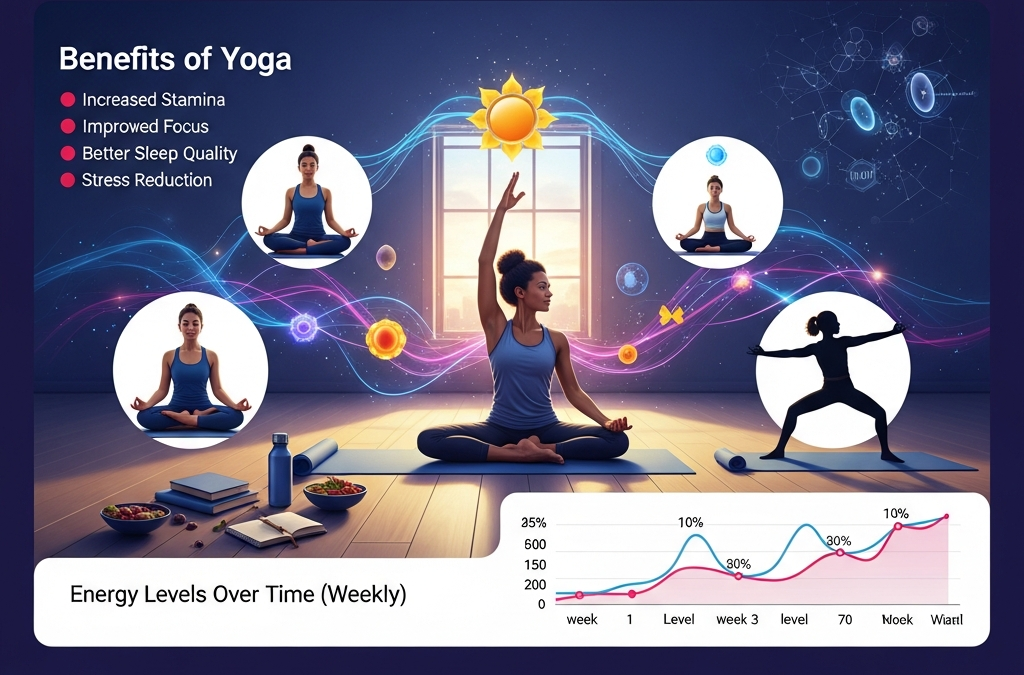
- Holistic Energy Boost: Yoga offers a comprehensive approach to combating fatigue by enhancing physiological functions, calming the mind, and balancing the nervous system, leading to sustained energy.
- Beyond Physical Poses: Effective energy elevation through yoga integrates dynamic asanas, powerful breathwork (pranayama), and calming meditation techniques.
- Customizable Practice: Various yoga styles and specific poses cater to different energy needs, from invigorating flows for an immediate boost to restorative practices for deep rejuvenation.
- Scientific Backing: Yoga’s impact on energy levels is supported by its ability to improve circulation, oxygen uptake, mitochondrial function, and hormonal balance, all crucial for vitality.
- Integrative Approach: For optimal and lasting energy, combine regular yoga practice with mindful nutrition, adequate sleep, and effective stress management.
The Science-Backed Benefits of Yoga for Sustained Energy
Introduction: Reclaiming Your Vitality – How Yoga Can Increase Energy Levels
In our fast-paced modern world, persistent fatigue and low energy have become common complaints. The constant demands of work, technology, and personal life often leave individuals feeling drained, mentally foggy, and physically sluggish. Quick fixes like caffeine provide temporary boosts, leading often to crashes that don’t address the root causes of energy depletion. This article delves into how a holistic practice like yoga can profoundly increase energy levels, offering a sustainable, deeply rejuvenating pathway to enhanced vitality. We’ll explore the scientific mechanisms, specific techniques, and practical strategies to integrate yoga into your life for lasting energy.
Understanding Energy and Fatigue in the Modern World
Energy is more than just a physical sensation of being awake; it’s a multifaceted state that encompasses physical, mental, and emotional vitality. Chronic fatigue is rampant today due to various lifestyle, psychological, and physiological factors.
The Physiological Roots of Low Energy
- Cellular Energy Production: Mitochondria are the powerhouses in our cells. Any impairment in mitochondrial function can lead to decreased energy levels.
- Circulation and Oxygen Delivery: Poor blood circulation restricts oxygen delivery to tissues, leading to fatigue.
- Inflammation and Stress: Chronic inflammation and stress can disrupt normal bodily functions, sapping energy.
Psychological Factors Contributing to Fatigue
- Mental Overload: Decision fatigue and cognitive drain can exhaust mental energies.
- Anxiety, Depression, and Stress: These emotional states are significant drains on vitality.
- Compassion Fatigue and Burnout: Constant emotional giving, especially in professions like caregiving, leads to exhaustion.
Lifestyle and Environmental Impacts
- Sedentary Lifestyles: Lack of physical activity results in decreased energy production.
- Poor Diet and Hydration: Nutrient deficiencies can significantly impact energy levels.
- Environmental Toxins: These can impair energy metabolism.
- Sleep Deprivation: Disruption to circadian rhythm results in diminished daily energy.
How Yoga Directly Impacts Cellular Energy Production
Yoga is not just about flexibility and relaxation but has profound effects on cellular energy production and physiological health. Understanding how yoga interacts with these biological processes offers deeper insight into its benefits.
Enhancing Mitochondrial Function through Movement
- Yoga stimulates mitochondrial biogenesis, the process by which cells increase mitochondrial numbers, enhancing an individual’s energy levels.
- Specific movements can improve cellular respiration and efficiency, supporting overall wellbeing.
- Studies demonstrate a correlation between regular exercise, including yoga, and heightened mitochondrial health.
Improving Oxygen Uptake and Circulation
- Deep Breathing (Pranayama): Enhances lung capacity and oxygen saturation, crucial for sustained energy.
- Asanas Supporting Blood Flow: Certain poses promote circulation to major organs.
- Research highlights cardiovascular benefits of dynamic yoga, supporting energy levels.
Hormonal Balance and Endocrine System Support
- Yoga reduces cortisol levels, the primary stress hormone, helping to balance mood and stamina.
- Practices support healthy thyroid and adrenal function.
- Neurotransmitter balance, including serotonin and dopamine, is positively impacted, enhancing energy.
Specific Yoga Styles for Energy Boost and Restoration
Various yoga traditions offer unique characteristics that impact energy levels differently. Whether you need immediate invigoration or deep rejuvenation, there’s a style tailored to meet your goals.
Vinyasa Flow for Dynamic Invigoration
- Synchronizes breath with movement, creating an energizing flow.
- Builds heat, improving cardiovascular endurance.
- Short sequences, such as morning flows, provide a vibrant energy start.
Sun Salutations: A Morning Energy Ritual
- Surya Namaskar (Sun Salutations) involves a series of poses that awaken the body and mind.
- Consistent morning practice establishes a foundation for daily vitality.
- Customizable to suit different fitness levels.
Kundalini Yoga for Awakening Inner Power
- Focuses on kriyas, breathwork, and chanting to move energy and clear blockages.
- Activates prana through the chakras, leading to invigoration.
- Specific sets designed to enhance energy flow.
Restorative Yoga for Deep Rejuvenation
- Utilizes props to support and relax the body wholly.
- Paradoxically uses rest to replenish energy.
- Lowers the nervous system’s fight-or-flight response, conserving energy.
| Yoga Style | Primary Energy Benefit | Key Characteristics | Ideal For |
|---|---|---|---|
| Vinyasa Flow | Dynamic Invigoration | Fluid transitions, breath-synchronized movement | Quick energy boost, cardiovascular health, strength |
| Kundalini | Awakening Inner Power | Kriyas, powerful breath, chanting, meditation | Deep energy work, mental clarity, spiritual awakening |
| Hatha | Balanced Energy, Foundation | Slower pace, holds poses longer, focus on alignment | Beginners, building foundational strength & awareness |
| Restorative | Deep Rejuvenation, Energy Conservation | Passive poses, heavy reliance on props, long holds | Stress relief, chronic fatigue, deep nervous system reset |
| Ashtanga | Sustained Heat & Stamina | Fixed sequence, rigorous, athletic flow | Advanced practitioners, building intense physical energy |
The Role of Pranayama (Breathwork) in Energy Regulation
Breathwork in yoga is pivotal in regulating energy and enhancing mental clarity. Various techniques provide specific benefits, from increased focus to overall vitality.
Ujjayi Breath for Focused Energy
- Also known as the Victorious Breath, it involves a gentle constriction of the throat.
- Calms the mind while energizing the body, ideal for focused transitions.
- Seamlessly integrated into yoga practice.
Kapalabhati (Skull Shining Breath) for Cleansing and Invigoration
- Involves forceful exhalation and passive inhalation, clearing mental fog.
- Boosts alertness and clears energy channels.
- Caution advised for those with hypertension or respiratory conditions.
Nadi Shodhana (Alternate Nostril Breathing) for Balance
- Balances lunar and solar energy channels, promoting equilibrium.
- Enhances mental clarity and emotional steadiness.
- Often used as preparation for meditation.
Deep Diaphragmatic Breathing for Stress Reduction
- Activates the parasympathetic nervous system, reducing stress.
- Increases oxygen absorption, optimizing cellular function.
- Fundamental for energy replenishment.
Asanas (Poses) to Awaken and Sustain Energy
Specific yoga postures are designed to enhance energy rigor and vitality, grounding individuals in strength while raising energy levels through intentional movement.
Standing Poses for Grounding and Strength
- Warrior Poses (Virabhadrasana I, II, III): Build stamina and determination.
- Tree Pose (Vrksasana): Enhances equilibrium and stability.
- Chair Pose (Utkatasana): Stokes inner strength and vitality.
Backbends for Opening the Chest and Heart
- Cobra Pose (Bhujangasana): Engages adrenal glands, opens the chest, and uplifts energy.
- Upward-Facing Dog (Urdhva Mukha Svanasana): Energizes the spine and sense of expansion.
- Camel Pose (Ustrasana): A heart-opener facilitating emotional release and energy flow.
Inversions for Boosting Circulation and Mental Clarity
- Downward-Facing Dog (Adho Mukha Svanasana): Foundational inversion for full-body circulation.
- Legs-Up-the-Wall Pose (Viparita Karani): Supports lymphatic drainage and nerve calming.
- Shoulder Stand (Sarvangasana – preparatory forms): Enhances thyroid function and cerebral blood flow.
Twists for Detoxification and Spinal Health
- Seated Spinal Twist (Ardha Matsyendrasana): Stimulates digestion and internal detoxification.
- Revolved Triangle Pose (Parivrtta Trikonasana): Energizes the spine, aiding digestion.
Meditation and Mindfulness for Mental Clarity and Energy Preservation
Meditation transcends physical movement, offering ways to manage energy mentally. Beyond the poses, it deepens relaxation, clarity, and preservation.
Calming the Nervous System
- Meditation reduces activation of the sympathetic nervous system.
- Encourages a ‘rest and digest’ state conducive to energy conservation.
- Improves heart rate variability, yielding vitality.
Reducing Mental Clutter and Decision Fatigue
- Mindfulness observes and detaches from excessive thinking.
- Cultivates mental clarity, reducing cognitive drain.
- Relieves mental clutter, supporting resilience.
Cultivating Present Moment Awareness
- Grounds individuals in the present, reducing anxieties.
- Strengthens appreciation for the moment, fueling energy.
- Enhances vitality and senses.
Integrating Yoga into a Daily Routine for Optimal Energy
For best results, yoga should fit seamlessly into daily life, creating a routine that fosters energy benefits at various times of the day.
Morning Rituals for a Vibrant Start
- Practice short sequences like Sun Salutations to awaken both the body and mind.
- Begin the day with energizing pranayama techniques.
- Engage in mindful movement before the first cup of coffee for a natural wake-up.
Mid-Day Energy Boosters
- Incorporate desk yoga stretches, combat mental fatigue and stiffness.
- Utilize short breathing exercises to refocus and refresh.
- Walking meditations during lunch breaks can rejuvenate energy.
Evening Practices for Restful Sleep
- Wind down with gentle restorative poses, calming the body for sleep.
- Quiet the mind with soothing pranayama like Nadi Shodhana.
- The quality of sleep is closely tied to next-day energy levels.
Creating a Consistent Practice Schedule
- Consistency is key – find the right duration and intensity for your lifestyle.
- Focus on small, steady efforts for lasting impact.
- Motivation through community involvement can build discipline.
Nutritional Support and Lifestyle Factors Complementing Yoga Practice
Yoga’s benefits are amplified when combined with supporting lifestyle factors such as diet, sleep, and stress management.
Hydration and Whole Foods for Sustained Energy
- Hydration is critical for cellular function and energy metabolism.
- Consuming nutrient-dense, unprocessed foods enhances energy sustainability.
- Avoid processed sugars and unhealthy fats which sap energy levels.
Sleep Hygiene and Its Impact on Vitality
- Maintain regular sleep patterns for diet energy replenishment.
- Optimize your sleep environment – darkness, temperature, noise.
- Understanding sleep cycles can enhance feelings of rejuvenation.
Stress Management Beyond the Mat
- Incorporate other stress-reduction activities, like hobbies or nature retreats.
- Learn to set boundaries to handle life’s demands proactively.
- Reduced stress significantly boosts overall energy.
Overcoming Common Obstacles to Consistent Yoga Practice
While establishing regular yoga practice can be challenging, there’s always a way to overcome obstacles each individual might face.
Time Constraints and Busy Schedules
- Implement short bursts of yoga at convenient times.
- Leverage studios’ flexibility and online resources.
- Self-care must be prioritized amid life’s demands.
Lack of Motivation or Perceived Flexibility
- Debunk myths like “you must be flexible” to embrace yoga.
- Begin with beginner modifications, reducing intimidation.
- Connect with a teacher or style that resonates personally.
Finding the Right Instructor or Style
- A knowledgeable and supportive teacher transforms practice.
- Explore different styles to find one that fits needs.
- A personalized approach is beneficial for individual experiences.
Measuring Your Energy Levels and Tracking Progress
Tracking progress offers both qualitative and quantitative insights into energy improvements achieved through regular yoga practice.
Subjective Well-being Scales
- Maintain a journal of daily energy levels and focus.
- Employ a 1-10 scale self-assessing improvements and moods.
- Document resilience and positive outlook progress.
Physical Stamina and Mental Clarity Improvements
- Note increased daily activity endurance.
- Experience reduced brain fog and enhanced concentration.
- Observe quicker physical exertion recovery times.
Sleep Quality Monitoring
- Track sleep duration and quality with wearables or apps.
- Note changes in ease of sleeping and waking refreshed.
Case Studies: Real-Life Transformations Through Yoga
These narratives provide tangible evidence of yoga’s effectiveness in boosting energy, highlighting different life scenarios that find relief through yoga’s practices.
Individual A: Combating Chronic Fatigue
- A story of gradual energy increase through gentle yoga and pranayama.
- Patience is emphasized in noting small, impactful changes over time.
- A journey from fatigue to revitalized daily life.
Individual B: Enhancing Athletic Performance
- An athlete improves stamina and recovery through dynamic yoga.
- Focus increases with decreased fatigue, boosting performance.
- Greater body awareness and injury prevention observed.
Individual C: Managing Stress-Related Burnout
- Restorative yoga, meditation, and breathwork aid recovery from burnout.
- Achieve balanced, energetic life by embracing emotional regulation.
- Rebuild resilience through nervous system support.
Yoga for Specific Populations and Energy Needs
Tailoring yoga practices to suit various demographic groups addresses unique energy challenges, providing universally accessible benefits.
Yoga for Desk Workers and Sedentary Lifestyles
- Engage in chair yoga to alleviate stiffness and boost circulation.
- Implement micro-breaks with standing poses and stretches.
- Address tech neck and shoulder tension specifically.
Prenatal Yoga for Energy During Pregnancy
- Gentle flows and restorative poses help manage pregnancy fatigue.
- Breathwork increases stamina and calms the mind.
- Offer safe modifications throughout trimesters.
Yoga for Seniors to Maintain Vitality
- Chair-assisted poses bolster balance and strength.
- Focus on joint mobility and gentle stretches.
- Enhances mental sharpness and emotional wellbeing.
Yoga for Recovery from Illness
- Utilize gentle and restorative practices to rebuild strength post-illness.
- Mindful movement aids pain management and emotional uplift.
- Healthcare professional consultation for tailored practice.
Advanced Techniques and Deeper Explorations
Exploring advanced techniques offers practitioners ways to deepen their practice, accessing profound energy manipulations.
Exploring Mudras and Bandhas for Energy Manipulation
- Hand gestures, known as mudras, help direct energy efficiently.
- Energetic locks, or bandhas, retain and channel energy.
- Examples include Jalandhara Bandha and Mula Bandha.
The Philosophy of Prana and Life Force
- Dive into the yogic concept of vital life energy, known as prana.
- Understand the five Vayus (movements of prana) and their roles.
- How yoga practices harmonize and balance the flow of prana.
Integrating Ayurveda for Holistic Energy Management
- Introduction to Ayurvedic principles for personalized energy management.
- Aligning yoga practices with individual constitution enhances vitality.
- Ayurvedic dietary choices provide sustained energy.
Frequently Asked Questions About Yoga and Energy
Can yoga really replace caffeine?
- Yoga provides sustainable energy through comprehensive wellness versus caffeine’s short-lived stimulation.
- Focus on long-term vitality rather than temporary fixes.
How long does it take to feel the energy benefits of yoga?
- Immediate results in calm and clarity can manifest after initial sessions.
- Physiological changes and energy improvement build over time with consistency.
Are there any risks to practicing yoga for energy?
- Proper alignment and awareness mitigate risks.
- Avoiding overexertion is crucial, especially with vigorous styles.
- Consulting professionals if underlying health issues exist is advised.
What if I’m not flexible? Can I still benefit?
- Yoga is accessible to all people irrespective of current flexibility or experience.
- Modifications and props open accessibility.
- Flexibility emerges as a result rather than a requirement.
Which style of yoga is best for beginners looking for energy?
- Styles such as Hatha, gentle Vinyasa, or beginner-friendly Kundalini are recommended.
- Experiment with different styles to find a personal fit.
Conclusion: Embracing a Vibrant Life Through Yoga
Yoga provides multifaceted benefits for sustainable energy enhancement, merging asanas, breathwork, and mindfulness to create a holistic vitality boost. By integrating yoga with mindful lifestyle choices, such as nutrition and effective stress management, it forms a synergy paving the path to lasting energy. Pursue your own yoga journey, discover renewed vigor, mental clarity, and emotional balance, transforming fatigue into sustainable vitality. It’s a consistent, mindful adventure to a vibrant life where yoga serves as a guide.